
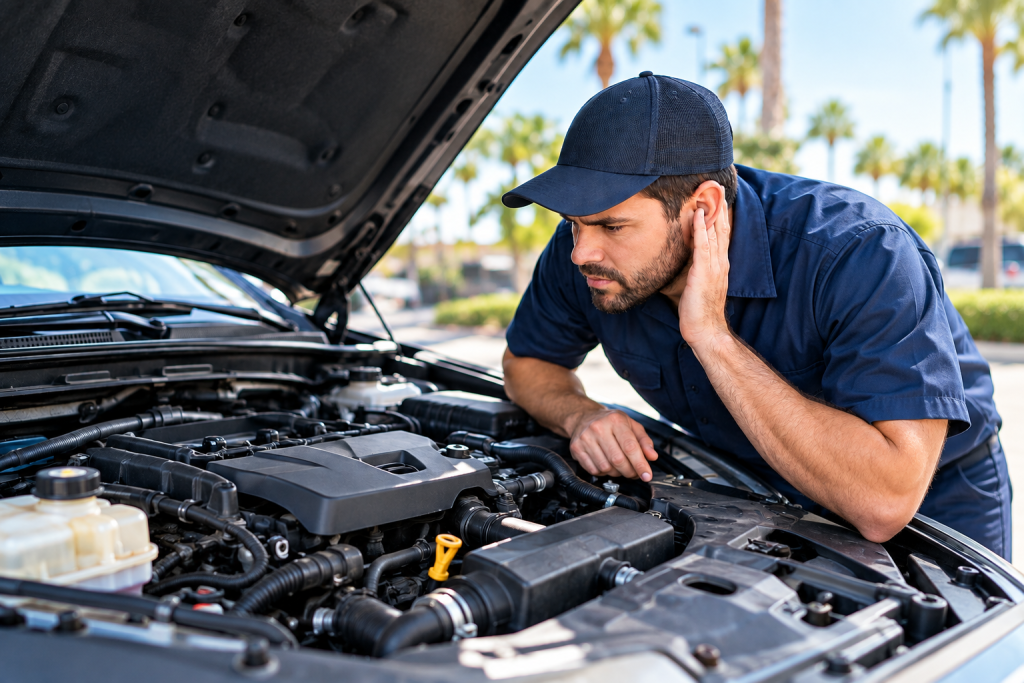
Your engine belt does a quiet, thankless job. It spins the parts that keep your car charged, cooled, and comfortable, and most drivers never think about it until it squeals, cracks, or snaps. When a belt fails, the car can lose power steering, stop charging the battery, or overheat within minutes. This Q&A answers the questions San Diego drivers ask most about engine belts, including what they do, how long they last, and when serpentine belt replacement in San Diego is due.
What Does an Engine Belt Do?
An engine belt transfers power from the engine’s crankshaft to the accessories that make the rest of the car work. Depending on your vehicle, one belt may drive the alternator, the water pump, the power steering pump, and the air conditioning compressor. Without it, none of those parts can run. That is why a failed belt often shows up as several problems at once, such as a battery warning light, rising engine temperature, and heavy steering.
What Is a Serpentine Belt?
A serpentine belt is a single long, ribbed belt that winds around several pulleys, which is where the name comes from. Most modern cars use one. Older vehicles often used several separate V belts, each driving a different part. A serpentine belt is kept tight by a tensioner, a spring loaded pulley that holds the right pressure on the belt. When the belt or the tensioner wears out, trouble follows.
Is the Serpentine Belt the Same as the Timing Belt?
No, and the difference matters. The serpentine belt sits on the outside of the engine and drives accessories. A timing belt, found on some engines, is hidden inside a cover and keeps the crankshaft and camshaft moving in sync. If a timing belt breaks, the engine can suffer severe internal damage. Many newer engines use a timing chain instead, which usually lasts much longer. Check your owner’s manual to see which your car has and when it should be serviced.
How Long Do Engine Belts Last?
Modern serpentine belts are made of durable rubber compounds and often last 60,000 to 100,000 miles. Older style belts wore out sooner. Those figures are a general guide, not a promise. Heat, oil leaks, a misaligned pulley, or a weak tensioner can shorten belt life considerably. Your owner’s manual gives the recommended inspection and replacement interval for your vehicle, and a technician can measure actual wear instead of relying on mileage alone.
What Is Engine Belt Noise and What Causes It?
Engine belt noise is usually the first sign something is wrong. A high pitched squeal on startup or when you turn the steering wheel often means the belt is slipping. Chirping can point to a misaligned pulley, while a rumbling or grinding sound may come from a worn bearing in a pulley or tensioner. Common causes include:
- A worn, glazed, or stretched belt that no longer grips the pulleys
- A weak tensioner that cannot hold proper tension
- Contamination from oil, coolant, or power steering fluid on the belt
- A misaligned or damaged pulley
- A failing component such as an alternator or water pump that is dragging on the belt
Noise should never be ignored. If you are unsure what you are hearing, our guide to the top 10 reasons your car won’t start and how to get back on the road covers several related problems that begin with the same warning signs.
What Are the Signs of a Worn Belt?
You can often spot wear before the belt fails. Look and listen for these clues:
- Cracks across the ribbed side of the belt, especially several in a small area
- Fraying, missing chunks, or split edges
- A shiny, glazed surface instead of a dull rubber finish
- Squealing, chirping, or whining from the front of the engine
- A battery or charging warning light
- Heavy steering or weak air conditioning
- An engine temperature gauge climbing higher than normal
Any one of these is a reason to have the belt inspected. Several at once suggest the belt may already be slipping or failing.
Can I Drive With a Bad Engine Belt?
It is a gamble. A squealing belt may keep working for a while, but a broken one stops everything it drives. Without the water pump, the engine can overheat quickly and sustain serious damage. Without the alternator, the battery drains until the car dies. Without power steering, turning becomes difficult, which is a real safety risk in traffic. If the belt looks damaged or the warning lights are on, it is safest to stop driving and call for help.
Why Does San Diego’s Climate Matter for Belts?
San Diego’s mild weather is easy on cars compared with extreme cold or heavy snow, but the coast brings its own challenges. Heat in the inland valleys, stop and go traffic on the freeways, and constant air conditioning use all keep belts working. Coastal moisture also plays a part. Our article on the marine layer and your car, San Diego’s hidden maintenance challenge explains how damp, salty air can speed up corrosion on pulleys, brackets, and other parts around the belt. Moisture on a belt can also cause squealing on cool, damp mornings that fades as the engine warms up. Do not assume that noise is harmless just because it goes away.
How Is a Serpentine Belt Replaced?
A technician first inspects the belt, the tensioner, and the pulleys. They check for cracks, wear, and fluid contamination, and confirm that each pulley spins smoothly and lines up properly. The old belt is removed by releasing the tensioner, and a new belt is routed carefully around every pulley following the correct path. The tensioner is then released to set tension, and the technician starts the engine to confirm that the belt runs quietly and stays aligned.
Replacing the belt alone may not solve a noise problem if the tensioner or a pulley is the real cause. A good technician checks those parts at the same time and tells you if they should be replaced too.
Can a Mobile Mechanic Replace My Belt at Home?
Yes. Belt replacement is a common job for a mobile mechanic. The technician comes to your home, workplace, or wherever the car is parked, brings the tools and a matching belt, and completes the work on the spot. There is no need to drive a car with a worn belt across town to a shop, and no need for a tow if the belt has already broken. For most vehicles, it is a straightforward job that can be handled in a driveway or parking lot.
When you book, share your vehicle’s year, make, model, and engine size, along with the symptoms you have noticed. That helps the technician bring the correct belt and any related parts.
How Often Should I Have My Belt Checked?
A visual inspection at every oil change is a smart habit. Many technicians check the belt, hoses, and tensioner as part of routine service. Have the belt checked sooner if you hear new noises, see warning lights, or notice cracks. Replacing a belt on schedule costs far less than dealing with an overheated engine or a roadside breakdown.
Can I Make My Belt Last Longer?
You cannot stop wear completely, but a few habits help. Fix oil and coolant leaks quickly, because fluids break down rubber. Avoid pressure washing the engine bay, which can force water onto the belt and pulleys. Address new noises early, and follow your manufacturer’s service schedule. Keeping up with regular maintenance protects the belt and the parts it drives.
Keep Your Engine Running Smoothly
Your engine belt is inexpensive compared with the parts it protects, yet a failure can leave you stranded and facing bigger repairs. Listen for squeals, look for cracks, and schedule an inspection before a small issue becomes a breakdown.
To learn more about our services, visit our homepage. If you hear belt noise or you are due for an inspection, reach out through our contact us page and we will come to you anywhere in the San Diego area.