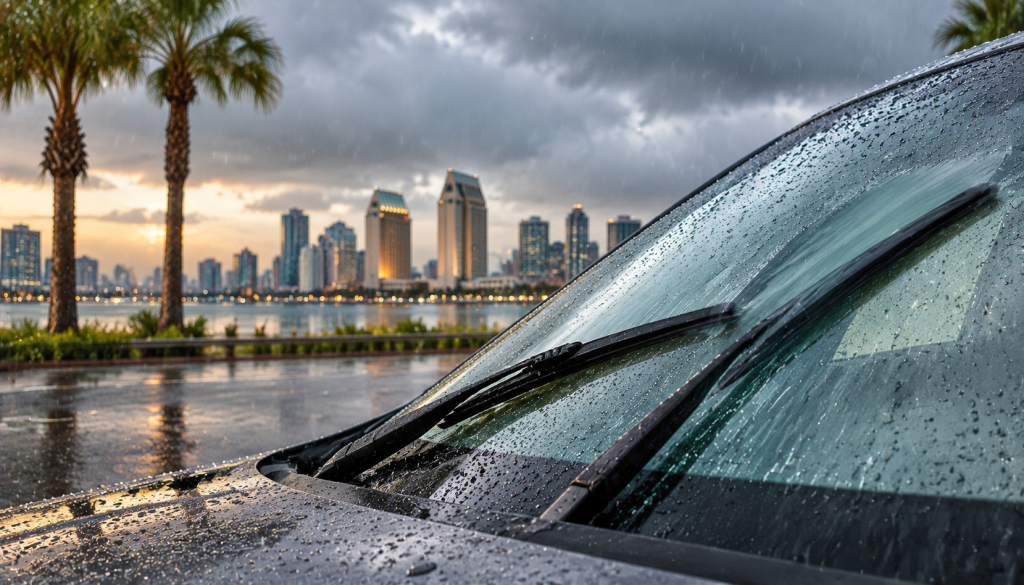
San Diego drivers go months without much rain, and that is exactly why the first storms of the season catch so many people off guard. After a long dry stretch, wiper blades have been baking in the sun, tires may have been ignored, and the road surface has been collecting dust, oil and grime. When the first real rain finally arrives, it mixes with that buildup and can make pavement slicker than you expect. Traffic slows, braking distances grow and small car problems that never mattered in dry weather suddenly matter a lot. The good news is that a short list of checks, done before the clouds roll in, can make a big difference. This guide covers how to prep your car for slick roads when the rain returns, starting with the wiper blades and tire tread and moving on to brakes, lights and driving habits. If you are searching for wiper blades in San Diego or a tire tread check before the wet season, start here.
Why the First Rain Is the Trickiest
During dry weather, oil, grease, rubber residue and dust slowly build up on road surfaces, especially at busy intersections and on freeways. When light rain first arrives, it can mix with that film and create a slippery layer before heavier rain has a chance to wash it away. Drivers who have not seen rain in months may also be out of practice, leaving shorter following distances and braking later than they should. Vehicles that have been sitting in the sun have their own issues: cracked wiper rubber, tires that have aged and a battery or other parts that have been quietly wearing. A few minutes of preparation helps on all fronts.
Check One: Wiper Blades
Wipers are the first thing you rely on when a storm hits. San Diego sun is hard on rubber, and blades often look fine until you actually use them. Signs that it is time for new blades include:
- Streaking. Lines of water left on the glass mean the rubber edge is worn.
- Skipping or chattering. The blade bounces across the windshield instead of gliding.
- Squeaking. This can mean hardened rubber or a dirty windshield.
- Cracks, splits or missing rubber. Look closely along the edge that touches the glass.
- A bent or loose frame. The blade should press evenly against the glass.
- Smearing and haze. Blades can smear the film that builds up on dry windshields.
Replace worn blades before the rain arrives. Many drivers change them about once a year, and your owner’s manual lists the correct sizes. Do not forget the rear wiper if your vehicle has one. Clean the windshield inside and out, since a hazy film inside the glass makes glare worse at night in the rain. Fill the washer reservoir, too, because spray from other cars and road film will coat the glass fast.
Check Two: Tire Tread and Condition
Your tires are the only part of the car that touches the road, and in wet conditions they have to do a lot more work. Tread channels move water out from under the tire so it can keep gripping the pavement. Worn tread cannot do that, which raises the risk of hydroplaning and longer stopping distances.
- Look at tread depth. Check for the wear indicators built into the tread, and look for uneven wear across the tire.
- Check tire pressure. Use the number on the sticker in the driver’s door jamb or in your owner’s manual, and check when the tires are cold. Under inflated or over inflated tires grip poorly in the wet.
- Inspect the sidewalls. Look for cracks, bulges and cuts. Sun exposure can age tires even when the tread looks fine.
- Check the age. Tires that have been on the car for many years may have hardened rubber that grips less well. Your owner’s manual and tire manufacturer have guidance.
- Consider rotation and alignment. If the car pulls to one side or wears tires unevenly, have it looked at.
- Check the spare, if your car has one.
If the tread is low or the tires show cracking or damage, plan to replace them before the wet season. A technician can measure the tread and give you an honest answer.
Check Three: Brakes
Wet roads mean longer stopping distances, and brakes that are marginal in dry weather can feel much worse in the rain. Listen for squealing or grinding, notice if the pedal feels soft or spongy and pay attention if the car pulls to one side or vibrates when stopping. Any of these signs is a good reason to have the brakes inspected. Brakes are a safety system, so do not put off a concern.
Check Four: Lights
Rain, spray and early darkness reduce visibility quickly. Test your headlights, brake lights, turn signals and hazard lights, and replace any bulb that is dim or burned out. Clean the lenses, and if they look cloudy or yellowed, have them evaluated since that can cut light output. Turn on your headlights in the rain so other drivers can see you.
Check Five: Battery and Belts
San Diego’s mild climate is easy on cars in some ways, but a battery that is several years old can still fail without warning, and a storm is a bad time to find out. Wipers, lights, defrosters and the fan all draw power at once in the rain. Look for slow cranking, dim lights or a warning light, and check the terminals for crusty buildup. A quick battery test is a smart step before the season starts. Belts and hoses deserve a look too. Heat and age crack rubber, and a failed belt can leave you stranded on a wet freeway. If you have questions about drive belts, our engine belt Q and A covers the basics.
Check Six: Defroster and Air Conditioning
Rainy days fog windows quickly, especially in a coastal climate. Make sure the defroster works and the air conditioning blows cold, since the AC helps remove moisture from the air that flows across the windshield. If the glass takes a long time to clear, have the system checked. Our post on the marine layer and your car, San Diego’s hidden maintenance challenge explains how coastal moisture affects your vehicle year round.
Check Seven: Fluids
Check engine oil, coolant, brake fluid and washer fluid according to your owner’s manual. Low or old fluids make problems more likely at the worst time. Never open the radiator or coolant cap when the engine is hot.
How to Drive in the First Rain
Even a well prepared car needs a careful driver. These habits help:
- Slow down. The first rain makes roads slick, so lower speeds give you more time to react.
- Increase your following distance. Stopping takes longer on wet pavement.
- Brake and steer gently. Smooth inputs help keep the car stable.
- Turn on your headlights. It helps others see you.
- Avoid cruise control in the rain.
- Watch for standing water. Puddles can hide potholes and cause hydroplaning. Slow down before you reach them rather than braking in them.
- If you start to hydroplane, ease off the accelerator, keep the steering steady and avoid slamming the brakes. Check your owner’s manual for guidance specific to your vehicle.
- Be careful in canyons, on hills and near the coast. Runoff, mud and debris can wash onto the road.
- Give yourself extra time. Traffic slows in the rain, and rushing is a bad idea.
- Pull over if you cannot see. Find a safe place to stop and wait for the rain to ease.
Flooded Roads and Low Crossings
Heavy rain can flood low spots, underpasses and river crossings, even in a mostly dry region. Do not drive through flooded roads. It is hard to tell how deep the water is, and moving water can carry a vehicle away more easily than most people expect. If a road is flooded, turn around and find another route. Pay attention to local alerts and road closures from official sources.
After the Rain: What to Check
- Look for warning lights, and notice whether the engine runs normally.
- Test the brakes gently once you are on dry pavement, especially if you drove through standing water.
- Check for dampness inside the cabin, which can point to leaks in door seals or drains.
- Listen for new noises such as squeals, rattles or grinding.
- Rinse mud and grime off the car, including the wheel wells.
- Check the tires for damage from debris.
How a Mobile Mechanic Can Help
It is easy to put off storm prep until the first dark clouds appear. A mobile mechanic can come to your home or workplace, inspect the wipers, tires, brakes, battery, lights and fluids and handle many common repairs on the spot, so you do not need to give up a day. Many wiper replacements and tire checks can be done right in your driveway. Some jobs, such as certain tire work, need specialized equipment and may require a shop, and a good technician will be honest about what can be done at your location.
Your Quick First Rain Checklist
- Replace worn wiper blades and top off washer fluid.
- Check tire tread, pressure and condition.
- Have the brakes inspected if anything seems off.
- Test all lights.
- Test the battery and look over belts and hoses.
- Make sure the defroster and AC work.
- Check fluids.
- Plan to slow down, and give yourself more space on the road.
The first rains do not need to catch you off guard. A short round of checks now can help keep your car safe and reliable when the weather turns. If you would like help getting ready, visit our homepage to learn more, or contact us to schedule a visit.